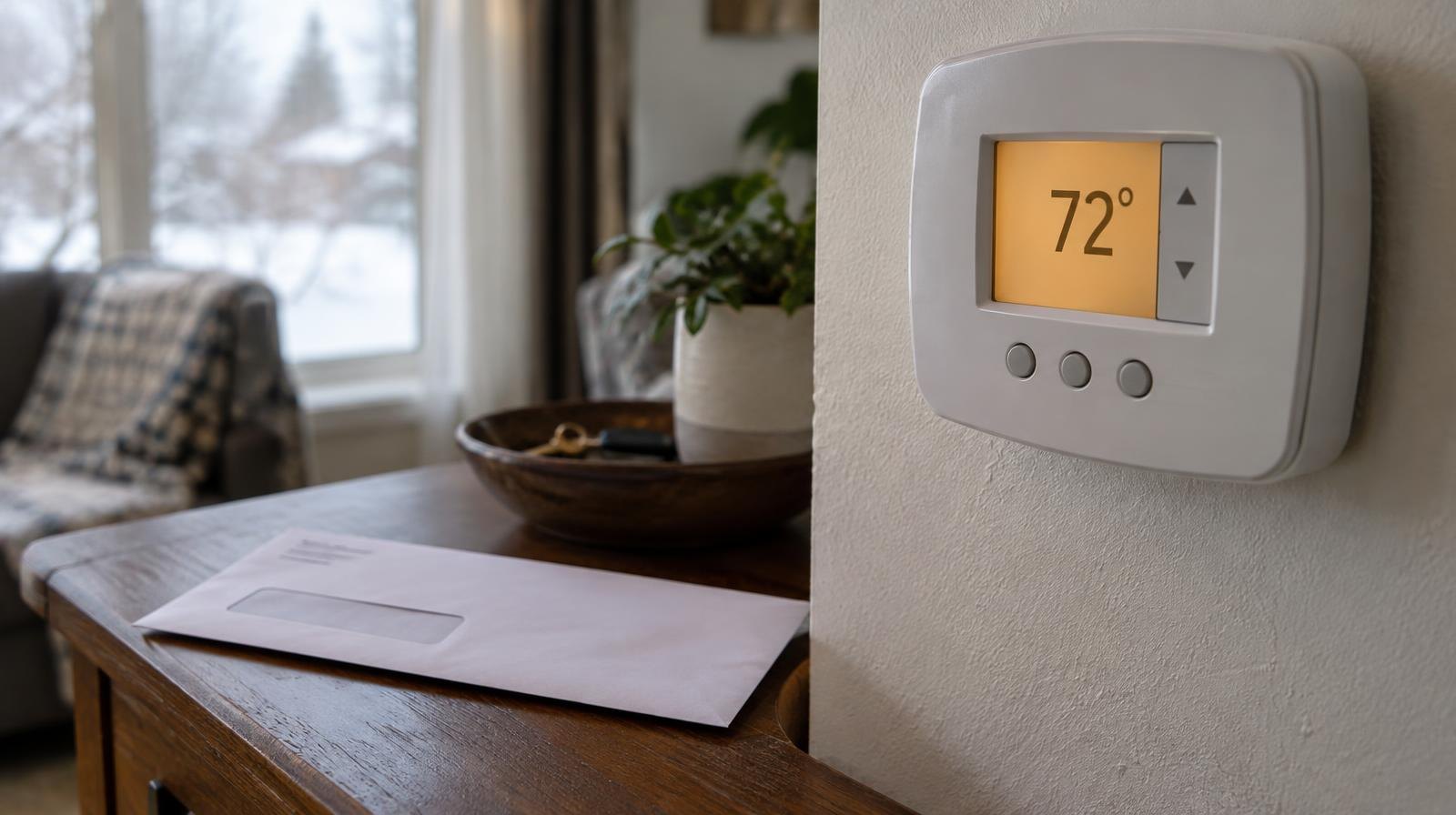
Cherry Hill households that heat with electricity or oil could pay significantly more this winter, as regional heating costs are projected to rise nearly 9% over last year.
The National Energy Assistance Directors Association (NEADA) projects U.S. households will spend an average of $1,030 on heating this winter, an $82 increase, as first reported by WHYY.
The 8.7% jump is more than 2.5 times the rate of inflation, according to the NEADA analysis.
The hit won't land evenly. Homes that rely on heating oil face the steepest increase, with spending projected to rise 21%, according to the U.S. Energy Information Administration. Only about 3% of U.S. households use oil as their primary fuel, but 82% of those homes are in the Northeast. The EIA projects electricity-heated homes will see a 4% increase in winter bills.
Natural gas and propane users may catch a break. The EIA expects those households to pay less this winter because of lower fuel costs. Forecasters also expect warmer temperatures in the Northeast compared with last year, which could reduce overall energy use.
"People are having trouble balancing how to pay their electric bill when they also have to pay for medical care and food," Charlotte Edelstein, a lawyer at Community Legal Services of Philadelphia, told WHYY.
Sanya Carley, a professor of energy policy and city planning at the University of Pennsylvania, told WHYY that rising electricity costs are a particular concern in the Philadelphia region. Electricity demand is growing across the 13-state area served by PJM Interconnection, which includes New Jersey. Grid upgrades to meet that demand can push costs higher for consumers.
NJ assistance programs accepting applications
New Jersey's Low Income Home Energy Assistance Program (LIHEAP) began accepting applications Oct. 1 and will continue through June 30, 2027, according to the state Department of Community Affairs. The program is first-come, first-served while funding lasts.
To qualify, a household must pay its own heating costs and have gross income at or below 60% of the state median income. For a single person, the cap is $51,273 per year. For a family of four, it is $98,602.
DCA Commissioner Jacquelyn A. Suárez said in a statement that the agency encourages eligible residents to apply early.
The same application also covers the Universal Service Fund (USF), which helps low-income households afford gas and electric bills. The approved 2026–27 USF budget is about $276.1 million, according to Fox 5 New York. USF applications are accepted year-round.
Residents who earn too much for LIHEAP or USF, or who need additional help, can apply for an NJ SHARES energy assistance grant at njshares.org or by calling 866-657-4273.
Residents can apply for LIHEAP and USF online at energyassistance.nj.gov or call 1-800-510-3102. Those 60 or older, or residents with a disability, may apply by mail or request a home visit.
Nearby help event in Voorhees
Voorhees Township is hosting a Utility Assistance Day on Thursday, Oct. 29, from 10 a.m. to 2 p.m. at the Voorhees Municipal Building, 2400 Voorhees Town Center. Staff from the New Jersey Department of Community Affairs, South Jersey Gas, Camden County government and other agencies will be on hand to help residents sign up for LIHEAP, USF and NJ SHARES. Call 856-435-1247 for details.