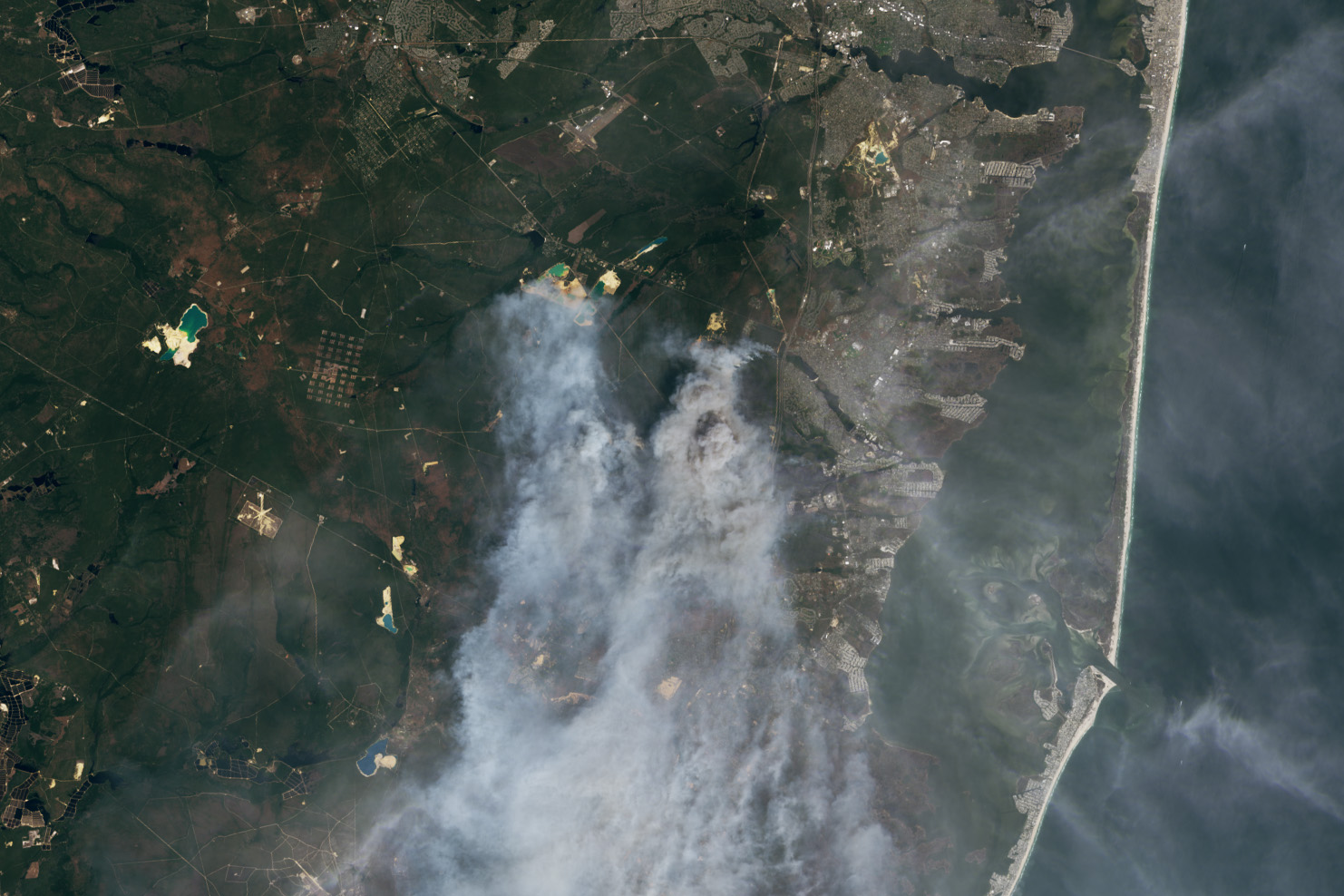
South Jersey's drought is increasing wildfire risk across the Cherry Hill area, with state data showing a sharp jump in fires and acres burned statewide in 2025.
Parts of New Jersey have been in drought conditions since June 2024, and sections of South Jersey were classified in a moderate drought as of Sept. 17, according to the New Jersey Drought Monitor. At that level, trees and landscaping are stressed and lake levels sit below normal capacity, South Jersey Climate News reported. New Jersey received well-above-average precipitation in August 2026, and it is unclear whether the moderate drought designation still applies across all of South Jersey.
Cherry Hill residents got a direct taste of the smoke threat on July 16. Camden County issued a Code Red Air Quality Alert after smoke from wildfires in eastern Canada drifted into the region. The New Jersey Department of Environmental Protection (NJDEP) warned that air pollution levels were unhealthy for sensitive groups.
Statewide, the numbers are climbing. The New Jersey Forest Fire Service recorded 1,322 wildfires that burned 27,229 acres in 2025. That represents a 22% increase in fires compared with the 20-year average, according to the agency's first annual wildfire report, released June 11. Acreage burned jumped 116%.
Nearly all of those fires, 99.6%, were caused by humans.
New Jersey's 2026 fire season has been quieter so far, with four wildfires statewide, including a 20-acre blaze in Cape May County in March and a 10-acre fire in Salem County in April.
The drought also hampered prevention efforts. The Forest Fire Service treated just 3,962 acres with prescribed fire in 2025. That was the lowest total in 25 years and only 16% of its 25,000-acre annual goal. The agency said the prolonged drought limited its ability to conduct controlled burns.
The biggest blaze of 2025, the Jones Road Wildfire, burned 14,949 acres after an illegal campfire sparked it on April 22. It threatened 1,320 structures and forced the evacuation of about 7,000 residents in Ocean and Lacey townships.
"Coming off an extremely busy fall season in 2024, 2025 was a significant fire year in which our crews worked for weeks without a break," Forest Fire Service Chief Bill Donnelly said in the June 11 report.
Fire weather conditions are also trending upward. A Climate Central analysis of the past 50 years found that annual fire weather days in New Jersey have increased by 13 in the northern part of the state. Southern New Jersey saw an eight-day increase, according to the NJDEP. Fire weather days combine warm temperatures, low humidity, wind and dry conditions that can speed wildfire spread.
NJDEP spokesman Vincent Grassi told South Jersey Climate News that drought raises the likelihood of ignition because forest fuels dry out and become more flammable. But he noted that wildfires in New Jersey "can occur at any time and are not dependent on drought conditions."
The CDC advises residents to check local air quality reports, protect themselves from ash and take steps to reduce smoke exposure. Children, pregnant women and people with chronic conditions such as asthma face the highest risk from wildfire smoke. Symptoms can include difficulty breathing, coughing, headaches and eye irritation.
The Forest Fire Service recommends that residents near a wildfire who have respiratory conditions keep windows closed and limit time outdoors.