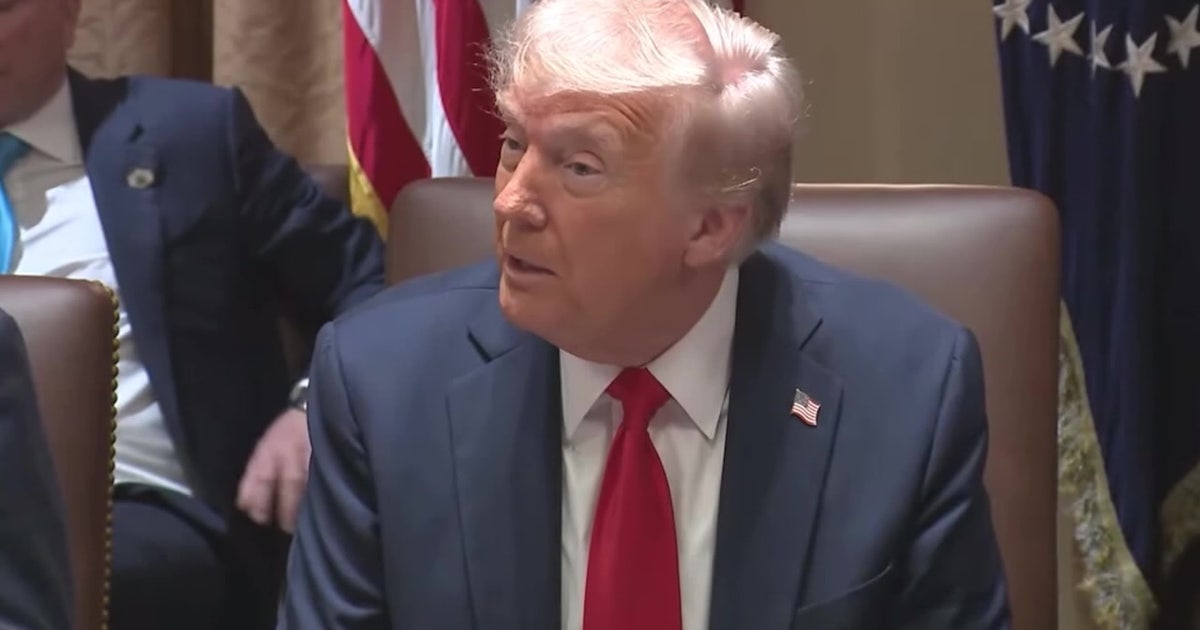
Cherry Hill and Camden County residents will get no federal help paying for the damage left by February's brutal cold wave, after President Trump denied New Jersey's request for $84 million in FEMA disaster relief.
The denial, issued in early July, rejected aid for a February 22-23 storm that knocked out power to more than 127,000 customers statewide, killed 12 people across nine counties according to the state's congressional delegation and destroyed crops across South Jersey. Camden County was one of 19 counties named in a bipartisan congressional letter requesting the disaster declaration.
Gov. Mikie Sherrill's administration is appealing the decision.
"Without that aid, our local governments would be stuck with the costs of an unprecedented snowstorm that didn't care about political boundaries," the spokesperson from Sherrill's office said. "We will appeal this decision and Governor Sherrill will continue to fight for every dime that New Jerseyans are owed, regardless of political party."
What it means locally
Without federal reimbursement, local governments and taxpayers will absorb the cleanup costs. In a typical disaster declaration, FEMA covers at least 75% of eligible expenses.
Rep. Nellie Pou, a Democrat who signed the delegation's April 20 letter to Trump and sits on the House Transportation and Infrastructure Committee that oversees FEMA, said the denial hits taxpayers twice: once through diverted local tax dollars, and again through lost federal services.
During the February freeze, Camden County shelters and warming centers saw a 20% spike in use, according to the Sun Papers. The region endured nine straight days at or below freezing during that stretch, the longest such streak since 2004, with wind chills dropping to minus 12 degrees Fahrenheit.
Crop losses across South Jersey
Rep. Herb Conaway, a Democrat whose 3rd Congressional District covers Burlington County and parts of Camden County, described the freeze as "a subzero shock" to South Jersey agriculture in an interview with NJ Spotlight News published Sunday.
"We lost just about the entirety of the peach crop. We lost about 30 percent of blueberries, and other crops," Conaway said.
FEMA's own preliminary damage assessments documented $84.4 million in eligible costs across the 19 counties, more than four times the state's $18.5 million threshold for a disaster declaration, according to the delegation's April 20 letter to Trump. The NJ Office of Emergency Management estimated total costs would exceed $100 million.
Political pattern draws scrutiny
Trump's denial was part of a broader rejection of $227 million in requests from four Democratic-led states: New Jersey, New York, Massachusetts and Rhode Island. Two days before those denials, Trump approved disaster aid for six Republican-led states.
In his second term, Trump has approved 89% of disaster requests from Republican governors and 23% from Democratic-led states, according to a memo prepared by Democratic members of the House Transportation and Infrastructure Committee. Data from Andrew Rumbach at the nonpartisan Urban Institute shows Trump has denied about 30% of requests in his second term, double the presidential average from 2000 to 2024.
Sen. Andy Kim, a Democrat, said in a statement to NJ Spotlight News: "We've all seen Donald Trump weaponize the presidency for political retribution. If there is a reason other than politics for him and his administration to withhold FEMA assistance, we need an explanation immediately."
Kim and 15 other Democratic senators have formally demanded documents from the White House regarding the pattern of approvals and denials.
FEMA said damage from snowstorms must be "genuinely extraordinary" to qualify and that the East Coast is "generally expected to manage major snowstorms independently." White House spokesperson Abigail Jackson said on July 8 there is no politicization in the president's disaster relief decisions.
Bipartisan FEMA reform advances
Rep. Jeff Van Drew, a Republican representing New Jersey's 2nd District and the only GOP member of the state's delegation to sign the April 20 disaster request letter, voted for a bipartisan bill to elevate FEMA to a Cabinet-level agency independent of the Department of Homeland Security. The bill advanced out of committee 57-3.
Craig Fugate, who led FEMA under President Obama, testified at the committee hearing that federal law gives the president broad discretion to approve or deny aid for any reason. "Nobody ever anticipated you'd weaponize disaster declarations," Fugate said.